This article explains the difference between hydration and moisturization, helps you choose the right skincare products for your skin type, and highlights which ingredients to look for. You do not need to buy more products for every skin concern.
What Is the Difference Between Hydrating and Nourishing Skincare Products?
Many people think hydrating and nourishing products do the same job. In fact, they help your skin in different ways, even though their benefits sometimes overlap.
What are hydrating skincare products?
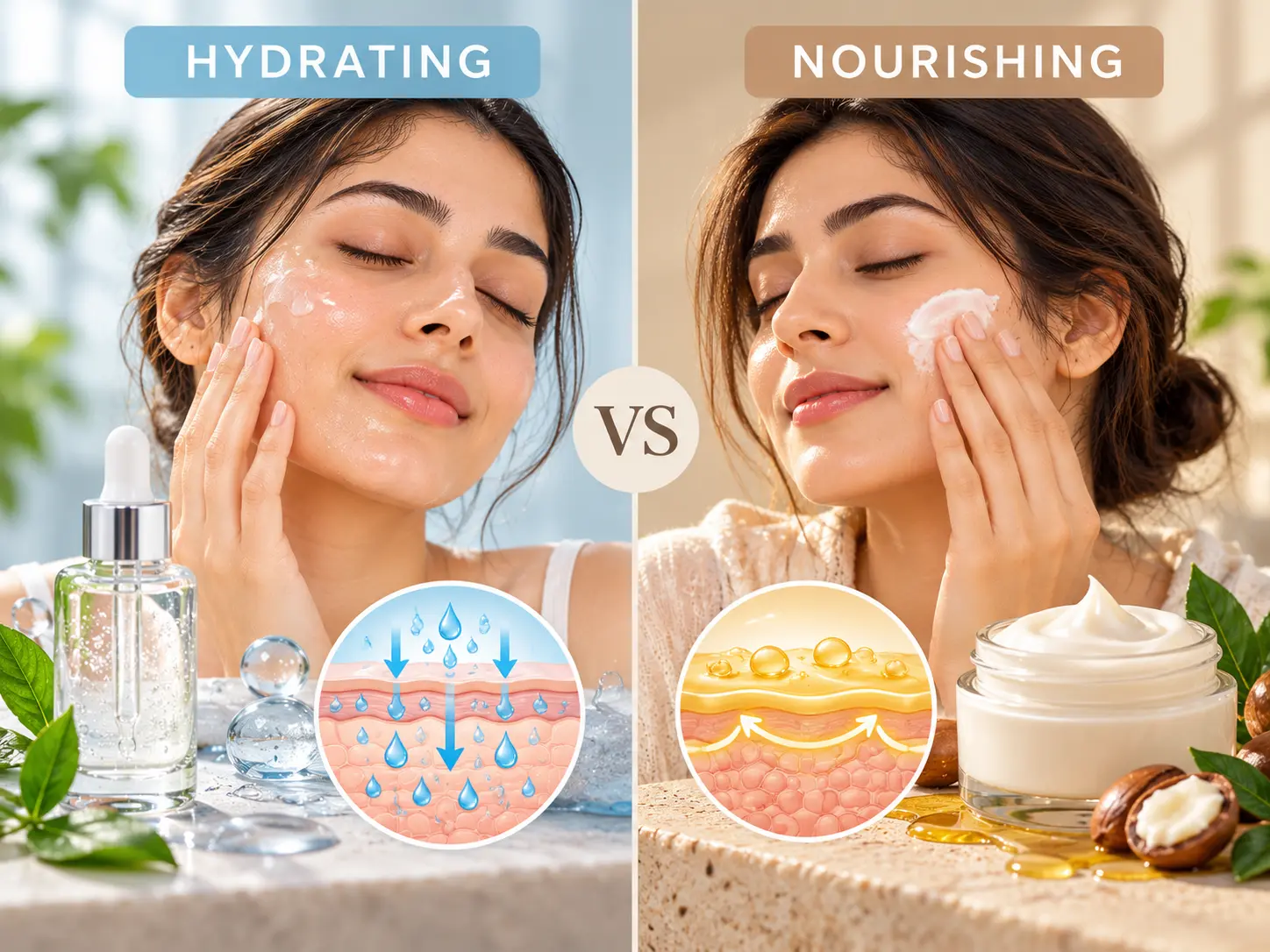
Hydrating products add or keep water in the outer layer of your skin. They usually contain humectants, ingredients that attract and retain water.
Common examples include:
- Glycerin: Attracts and retains water in the skin.
- Hyaluronic acid: Helps bind water and improve skin hydration.
- Panthenol: Helps condition and moisturize the skin.
- Urea: Helps hydrate the skin; some formulations also soften rough skin.
A hydrating serum or light gel can help if your skin feels tight, less plump, or dehydrated. But if your skin is very dry, a serum alone might not stop moisture loss.
What are nourishing skincare products?
“Nourishing” is mostly a marketing word in skincare, not a medical term. It usually means products with emollients, oils, lipids, and other ingredients that soften your skin and help protect its outer layer.
Ingredients often found in these products include:
- Ceramides: Lipids that help support the skin barrier.
- Shea butter: An emollient that softens skin.
- Squalane: An emollient that helps improve skin softness.
- Fatty acids: Lipids used in formulations to condition the skin.
- Petrolatum: An occlusive ingredient that helps reduce water loss.
These ingredients can help if your skin is dry, rough, or uncomfortable, depending on the product and what your skin needs. Best skin care products in Pakistan
Can one product do both?
Yes. Many moisturizers mix humectants, emollients, and occlusive ingredients. So one product can draw in water, soften your skin, and help keep moisture in.
Don’t just focus on words like hydrating, nourishing, glow, or deep moisture on the label. Check the ingredients, texture, what the product is for, and how your skin reacts. Best moisturizers for dry skin in Pakistan
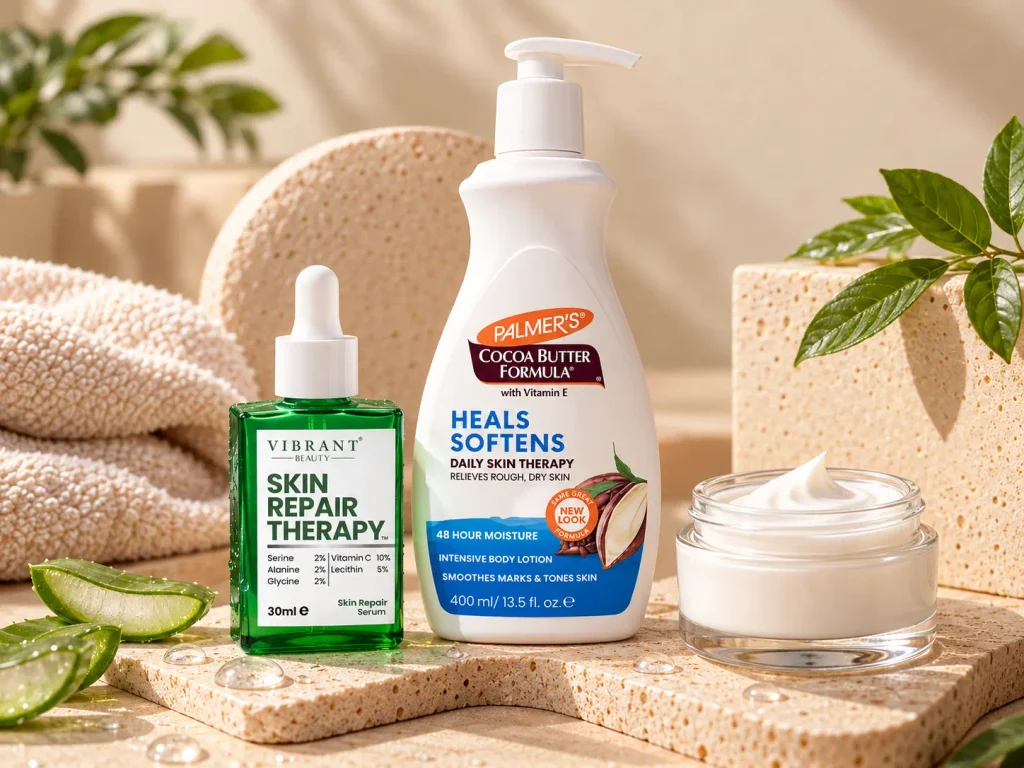
Hydration vs Nourishment: Quick Comparison
| Feature | Hydrating products | Nourishing products |
| Main purpose | Help increase or maintain water in the skin | Help soften skin and support moisture retention |
| Common ingredients | Glycerin, hyaluronic acid, panthenol | Ceramides, shea butter, squalane, fatty acids |
| Typical textures | Lightweight gels, serums, lotions | Creams, richer lotions, balms |
| Often useful for | Skin that feels dehydrated or tight | Skin that feels dry, rough, or uncomfortable |
| Important limitation | May not provide enough protection against water loss on its own | Richness alone does not guarantee better results |
These are just general guidelines, not strict rules. A light product can be nourishing, and a thick cream can hydrate. What’s inside matters more than the label.
Which One Does Your Skin Need?
It depends on how your skin feels, how oily it is, your environment, and what you already use in your routine.
1. If your skin feels dehydrated
Your skin might feel tight or look less plump, even if it’s oily. Try a moisturizer or serum with glycerin or hyaluronic acid.
If needed, use a good moisturizer afterward, especially if the air is dry or your skin loses moisture quickly.
2. If your skin is dry and flaky
A thicker moisturizer may help more than a light serum. Creams with emollients and ingredients that stop water loss can soften dry skin. Causes of dry and tight skin.
Apply moisturizer after washing while your skin is still slightly damp. The American Academy of Dermatology recommends moisturizing after bathing or washing to help retain water.
3. If your skin is oily
Oily skin can still get dehydrated or irritated. You don’t always need a heavy cream.
Use a lightweight moisturizer that feels good on your skin. If you get acne, look for one labeled non-comedogenic. This means it’s less likely to clog pores, but no label can promise it will work for everyone.
4. If your skin is sensitive
Choose a simple routine. Keep your routine simple and try fragrance-free products. Add new products one at a time so you can spot any triggers. If you experience persistent burning, swelling, or a rash, stop using it and seek medical advice when needed. Sensitive skin can have several causes, so don’t assume every reaction is simply dehydration. Skincare tips for sensitive skin
5. If you have combination skin
Your cheeks might feel dry, but your forehead and nose could be oily. Use a light moisturizer on most of your face and a richer one only where you need extra care.
You don’t have to use the same type of product on every part of your face.
How Pakistan’s Weather Can Affect Your Choice
Pakistan’s climate varies by region and season: hot weather, humidity, and dry winter air. Hot days, humidity, air conditioning, dry winter air, and sun can all affect how your skin feels. It can feel more comfortable, especially if your skin is oily. Look for products that hydrate without leaving a heavy, unpleasant finish.
Don’t skip moisturizer just because it’s humid. Pick what works for your skin. Daily skin care routine for Pakistani weather
During dry or cooler weather
Your skin may benefit from a richer cream. If your skin gets dry, rough, or tight, a richer cream can help. Ingredients like glycerin, ceramides, and petrolatum help keep your skin hydrated. skin feels dry after long hours in air conditioning, use a suitable moisturizer and avoid overly harsh cleansers.
Throughout the year
Use broad-spectrum sunscreen with SPF 30 or higher during the day. Hydrating and nourishing products can’t replace sun protection.
For more Pakistan-specific advice, read our guide on How Pollution and Weather Affect Your Skin in Pakistan.
How to Build a Simple Hydrating and Nourishing Routine
You don’t need a different product for every skincare benefit. Start with a few that really meet your needsGently cleanse your face, or rinse with water if that works for you.s your skin.
- Use a hydrating serum if your skin needs it.
- Apply a moisturizer that suits your skin. Finish with a broad-spectrum sunscreen with SPF 30 or higher.n.
Night: Gently take off sunscreen and makeup.
- Gently cleanse your skin without scrubbing.
- Use a moisturizer suited to your skin type.
- If your skin is very dry, consider a richer cream on drier areas.
A separate serum is optional. If your moisturizer keeps your skin comfortable, you might not need anything else for hydration.
Common Mistakes to Avoid
- Buying a product just because it says “hydrating” or “nourishing.”
- Assuming that oily skin never needs moisturizer.
- Using several serums without a clear reason.
- Choosing a very rich cream when a lighter one would work better for your skin. To solve every cause of dry skin.
- Ignoring irritation just because a product claims to be natural or gentle.
- Skipping sunscreen just because your moisturizer has hydrating ingredients.
- Switching your routine too often to really see if a product works.
If you still have dryness, redness, itching, or burning after following a simple routine, see a dermatologist. Ongoing symptoms might mean you need more than just skincare products.
FAQ
1. Is hydrating the same as moisturizing?
Not exactly. Hydrating usually means adding or keeping water in your skin, while moisturizing products also soften skin and help stop water loss. Many products do both.
2. Which is better for dry skin: hydrating or nourishing products?
Dry skin often needs both hydration and ingredients that soften and keep in moisture. A cream with humectants and emollients can help more than just a light serum. Can oily skin use nourishing products?
Yes. Oily skin still needs hydration and moisture. Pick a texture that feels good, and if you get breakouts, look for non-comedogenic products.
4. Should I apply a hydrating serum before moisturizer?
Usually, apply a water-based serum before your moisturizer, following the directions. The moisturizer helps lock in water. If your moisturizer works well, you might not need a separate serum.
5. Is hyaluronic acid enough to moisturize the skin?
Hyaluronic acid pulls in and holds water, but a product with it might not provide everything your skin needs. Depending on your skin and the product, you may also need a moisturizer with emollients or occlusive ingredients.
6. Can I use hydrating and nourishing products together?
Yes. You can use a hydrating serum under your moisturizer if both work for you. But you don’t need lots of products to have healthy skin.
Final Verdict
Hydrating and nourishing skincare products aren’t rivals. They can work together and support your skin in different ways, as glycerin and hyaluronic acid help retain moisture. In contrast, nourishing ingredients such as ceramides and emollients help soften the skin and support its protective outer layer. Many effective moisturizers combine both approaches.
For SinghFor Singharcity.pk readers, the best way to start is simple: figure out if your skin feels dehydrated, dry, oily, sensitive, or a mix. Then choose products that match those needs without overcomplicating your routine.